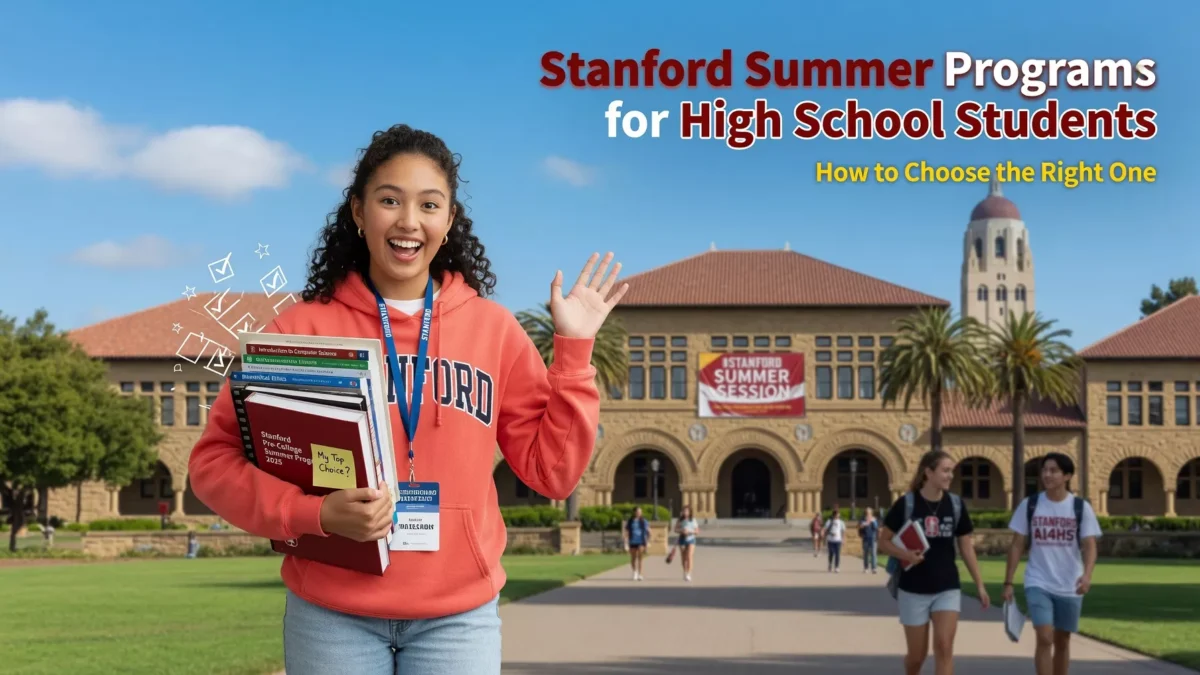
Stanford offers many summer program options for high school students, not one single program. Your best fit depends on your grade, interests, location, budget, and whether you want an online, commuter, or residential experience.
You might want college-level classes, hands-on research, a focused subject course, or career exploration in medicine or law. Dates, costs, and application status can change, so always confirm details on the official Stanford page before you apply.
Key Takeaways
- Stanford Summer Session offers college courses and campus life for eligible students ages 16 through 19.
- Pre-Collegiate programs focus on one subject and often work well for younger high school students.
- Research internships such as SIMR and SHTEM have strict grade, residency, and housing rules.
- Tuition ranges widely, and free programs may still require you to cover travel, meals, or housing.
- Choose a program that supports a real academic interest, not only the Stanford name.
Which Stanford University Summer Programs Fit Your Goals?
Stanford’s summer programs for high school students fall into several categories. Stanford Summer Session gives eligible students the closest experience to taking regular university courses. You take Stanford classes, earn academic credit, and may live on campus or commute.
Other programs focus on one subject for a shorter period. Stanford Pre-Collegiate Summer Institutes, Stanford Summer Humanities Institute (SHI), and Stanford University Mathematics Camp (SUMaC) offer concentrated academic study. These options suit you if you already know which field you want to explore.
Research programs have a different structure. SIMR introduces rising juniors and seniors to biomedical research, while SHTEM places students in STEM internships. Stanford AI4ALL, sometimes listed as Stanford AI for All, focuses on artificial intelligence. Programs such as the Clinical Anatomy Summer Program and Stanford Intensive Law & Trial focus on career-related skills.
Some options come directly from Stanford departments or Stanford Pre-Collegiate Studies. Others may involve outside partners, so check who runs the program before you pay an application fee or submit personal information.
Academic and college-credit options for high school students
Stanford Summer Session for high school students is the broadest option. Its 2026 session runs June 20 through August 16. You must be at least 16 by June 20 and no older than 19 by August 16. Applicants are generally current sophomores, juniors, seniors, or gap-year students.
You usually take Stanford courses alongside other students while experiencing campus routines. Residential students live on campus, while commuters arrange local housing and transportation. The pace is demanding, especially if you take multiple units.
Stanford Pre-Collegiate Summer Institutes take a narrower approach. In 2026, the program offered more than 75 two-week online courses for students in grades 8 through 11. You can take one course per summer, and live attendance is required. The 2026 application cycle is closed.
Research, STEM, medicine, humanities, and law experiences
A focused program can help you test an interest before college. SUMaC fits students with strong mathematical preparation, including proof-based work. SHI suits students who want serious reading, writing, and discussion in the humanities. Stanford AI4ALL offers an entry point into artificial intelligence.
SIMR targets rising juniors and seniors interested in biomedical research. SHTEM is an unpaid STEM internship for high school juniors and seniors who are U.S. citizens or permanent residents. It does not provide housing, charges a $95 application fee, and requires students to arrange their own commute or stay.
Medical and law programs vary even more. CASP explores clinical anatomy, while Intensive Law & Trial introduces legal reasoning and trial skills. Selective programs often expect strong grades, relevant coursework, and thoughtful application writing. Each program has its own application process.
2026 Dates, Eligibility, and Costs You Need to Check
You can save time by checking eligibility before you start an application. Stanford programs differ by age, grade, citizenship, residency, academic background, and location. A program that sounds ideal may require you to live nearby or commute every day.
Summer Session is open to students ages 16 through 19 who are current sophomores, juniors, or seniors. In contrast, SHI, SUMaC, SIMR, and many research programs often focus on rising juniors and seniors. Some Pre-Collegiate options welcome younger students.
Local limits matter. GRIPS and Stanford Young Investigators often target Bay Area students. SHTEM requires U.S. citizenship or permanent residency. Some medical opportunities also serve Northern California students or particular local communities.
Before you apply, confirm whether housing is included. Free tuition does not mean free transportation, meals, or lodging.
Compare age, grade, location, and residency rules
Summer Session offers residential and commuter formats, while Pre-Collegiate Institutes often run online. Online study may sound easier, but required live sessions can conflict with your time zone or summer plans.
SIMR and SHTEM can provide meaningful research exposure, yet their restrictions are tighter than those for academic courses. For example, SIMR generally serves U.S.-based students who meet its grade and age requirements. SHTEM also limits participation to eligible juniors and seniors with U.S. citizenship or permanent residency.
Review the current Stanford Pre-Collegiate program listings for format, grades served, and financial-aid information. Program pages can change between application cycles.
Know the key 2026 dates and expenses
SIMR runs June 8 through July 30, 2026. SHI offers sessions from June 21 through July 10 and July 12 through July 31. SUMaC has online and residential options, while AI4ALL offers online and residential formats.
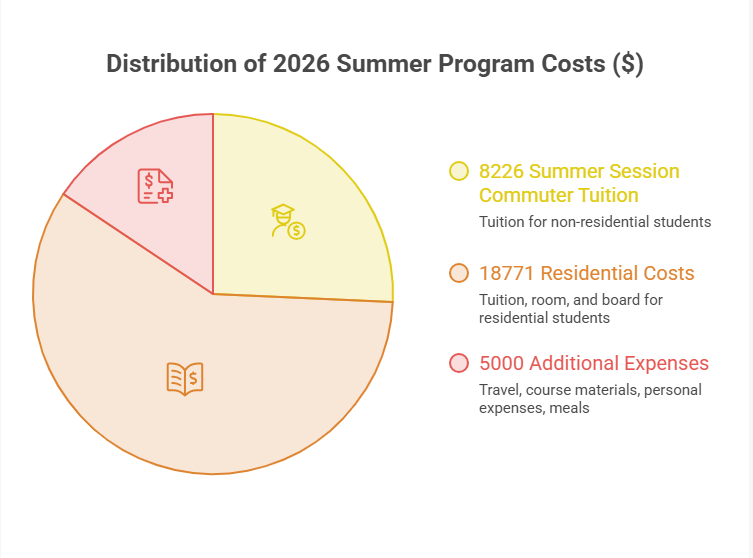
Summer Session commuter tuition starts at $8,226 for 2026. Residential costs start at $18,771 and include room and board. You should also plan for travel, course materials, personal expenses, and meals not covered by the program.
SHTEM has no tuition, but it is unpaid and has a nonrefundable application fee. Look for need-based aid, fee waivers, and scholarship details on each application page. Don’t assume every Stanford-affiliated program offers the same support.
How to Choose and Apply to the Right Stanford Summer Program
Start with your eligibility, then narrow choices by subject, format, length, cost, location, and selectivity. A program should fit a clear goal, such as exploring medicine, testing your interest in advanced math, or taking a college course before senior year.
Stanford’s name should not be your only reason to apply. A focused online course can be more useful than an expensive residential program if it matches your academic direction and family budget.
Use your interests and schedule to narrow the list
Make a simple comparison chart before you apply. Include the program name, dates, grade requirement, location, cost, housing, deadline, and required materials.
Summer Session may suit you if you want broad college exposure. Pre-Collegiate Institutes work well for focused online study. SIMR and SHTEM fit students seeking research, while SHI and SUMaC offer intensive subject study.
Also consider travel plans, online time zones, transportation, and your ability to handle a demanding schedule. A two-week course can still require several hours of work each day.
Prepare a stronger application before the deadline
Read every official requirement early. You may need transcripts, teacher recommendations, course information, a personal statement, and proof of residency. Some programs also ask for evidence of advanced preparation in math, science, or another subject.
Write about a real question, project, or academic interest. Specific details make your application stronger than broad statements about loving Stanford. Deadlines differ widely. The 2026 SHTEM deadline fell in late February, while other programs opened and closed on separate schedules. Save confirmation emails and check your application portal after submission.
Choose the Program That Fits Your Summer
Stanford summer opportunities range from two-week online courses to residential college study and competitive research internships. Your eligibility, goals, budget, and schedule matter more than the university name on the brochure.
Confirm current dates, costs, housing, financial aid, and application status through Stanford Summer Session, Stanford Pre-Collegiate Studies, and department pages before you commit.
Stanford Pre-Collegiate Studies (Non-Credit)
Stanford’s non-credit institutes are world-renowned for their rigor and exclusivity. These programs act as highly competitive summer research opportunities for gifted teens, allowing students to work with Stanford faculty, researchers, and graduate students.
Stanford Institutes of Medicine Summer Research Program (SIMR)
For students dreaming of a career in medicine or bioengineering, SIMR is the gold standard. This eight-week program pairs high schoolers with Stanford researchers to perform hands-on, original research in cutting-edge labs.
Before applying, you must review the Stanford Institutes of Medicine Summer Research Program eligibility guidelines carefully. Typically, applicants must be current high school juniors or seniors, at least 16 years old by the start of the program, and U.S. citizens or permanent residents (due to grant funding restrictions). Because the program is heavily funded, accepted students receive a stipend, making it an incredibly accessible option for qualified local students.
Stanford Humanities Institute (SHI)
STEM often steals the spotlight, but the Stanford Humanities Institute is an unparalleled experience for students passionate about literature, history, and philosophy. Students spend three weeks exploring topics like the ancient world, racial identity, or the ethics of artificial intelligence.
Be prepared for stiff competition. The Stanford Humanities Institute acceptance rate is famously low, often hovering around the single digits. Applicants must demonstrate a profound, genuine love for the humanities through their essays and past academic performance.
Stanford University Mathematics Camp (SUMaC)
SUMaC is legendary among high school math circles. It focuses on pure mathematics, guiding students through advanced topics like abstract algebra and number theory—subjects rarely taught in high school.
Preparing for Stanford University Mathematics Camp SuMac admissions requires intense dedication. The application features a notoriously difficult admissions exam. You don’t necessarily have to solve every problem perfectly, but you must demonstrate an exceptional ability to think logically, write mathematical proofs, and tackle complex, unseen concepts.
Stanford Summer Arts Institute
For creatives, the Stanford Summer Arts Institute offers interdisciplinary courses that blend art with subjects like technology, psychology, and social justice.
A critical component of this application is your creative evidence. When preparing, pay strict attention to the Stanford Summer Arts Institute portfolio requirements. Depending on your focus be it visual arts, music, or creative writing you will need to submit high-quality samples that highlight not just your technical skill, but your unique artistic voice and conceptual thinking.
Local Opportunities: The Stanford Science Circle
If you happen to live in the San Francisco Bay Area, you have a unique advantage. The Stanford Science Circle for local high schoolers is an academic enrichment program that runs throughout the year and sometimes into the summer. It offers a fantastic, lower-pressure way to engage with Stanford faculty and graduate students on topics ranging from neuroscience to quantum mechanics without needing to commit to a full residential summer program.
Campus Life: What to Expect
For those attending in person, the residential experience is often the highlight of the summer. The housing and residential life for Stanford summer students is designed to be a safe, structured, yet liberating introduction to independence.
Students live in standard undergraduate dormitories, usually sharing a room with one other student. Residential Counselors (often current Stanford undergrads) live in the dorms, acting as mentors, rule-enforcers, and tour guides.
A typical day involves morning lectures, afternoon lab work or study groups, and evenings filled with organized social activities. Weekends feature supervised trips off campus to explore the Bay Area think visits to the Golden Gate Bridge, the Santa Cruz boardwalk, or Silicon Valley tech museums. It is a brilliant way to build a global network of friends who share your academic passions.

Study Pariksha is a comprehensive educational platform dedicated to helping students achieve academic and career success. We provide high-quality study materials, up-to-date exam notifications, detailed information on courses and academic programs, as well as a wide collection of eBooks and downloadable study PDFs.
